Mechanism 61
Dismissing a Chapter 11 by agreement
Can a Chapter 11 case end without a confirmed plan?
Yes, and often it should. Where the case has done its work — the stay bought the time, the parties reached terms, the debt was restructured by agreement — an agreed dismissal is faster and far cheaper than confirmation, and it puts the debtor out from under the estate rather than under a plan it then has to perform.
By John P. Henry · 11 U.S.C. § 1112(b) · Reviewed 2026-08-02
The authority
[O]n request of a party in interest, and after notice and a hearing, the court shall convert a case under this chapter to a case under chapter 7 or dismiss a case under this chapter, whichever is in the best interests of creditors and the estate, for cause …11 U.S.C. § 1112(b)(1)
11 U.S.C. § 1112(b)
When it applies
The single-asset or single-issue Chapter 11 filed to stop a foreclosure or an execution sale while a deal gets done. Once the deal is documented and funded, confirmation is expensive theatre.
How it is proved up
- Document the settlement first and dismiss second. The order should recite what the parties agreed, so the dismissal is the last step rather than the hope.
- Support it with a declaration from someone with knowledge of the estate — what creditors are being paid, from what source, and why dismissal serves them better than conversion.
- Address the alternative expressly. The court must choose between conversion and dismissal on the best interests of creditors and the estate, so the motion has to say why dismissal wins.
- Clear the record afterwards. Terminate the financing statements, release the liens, and file what the settlement requires — a dismissal that leaves encumbrances in place has not finished the job.
- Get administrative claims and fees resolved before dismissal, because the forum disappears with the case.
What defeats it
- Creditors who prefer a Chapter 7 trustee to look at pre-petition transfers, and who will say so.
- Unpaid administrative expenses, which the court will not simply abandon.
- A record suggesting the filing was in bad faith, where dismissal looks like escape rather than resolution.
- The United States Trustee, whose view on conversion versus dismissal carries weight.
Where I have used it
In re ARGDOWNTOWN, LLC · United States Bankruptcy Court for the Northern District of Texas. Voluntary petition in February 2023; agreed motion to dismiss the following month supported by a principal’s declaration; signed agreed order of dismissal; settlement executed in June 2023, with UCC-3 terminations filed to clear the record.
The order
Exhibit — as signed
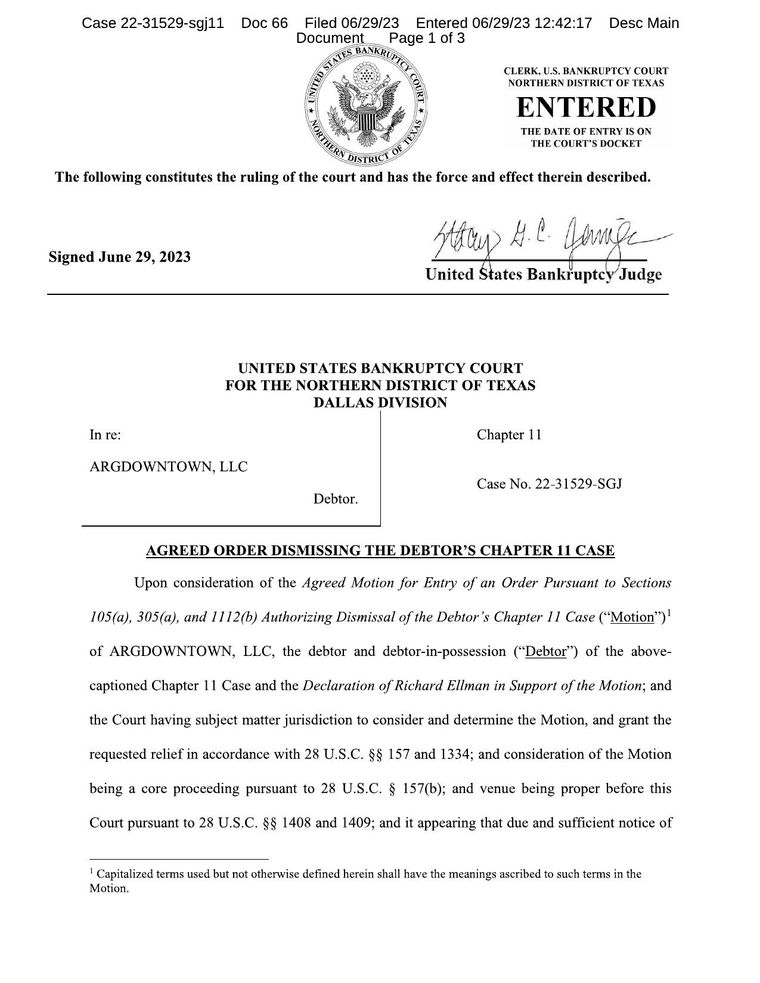
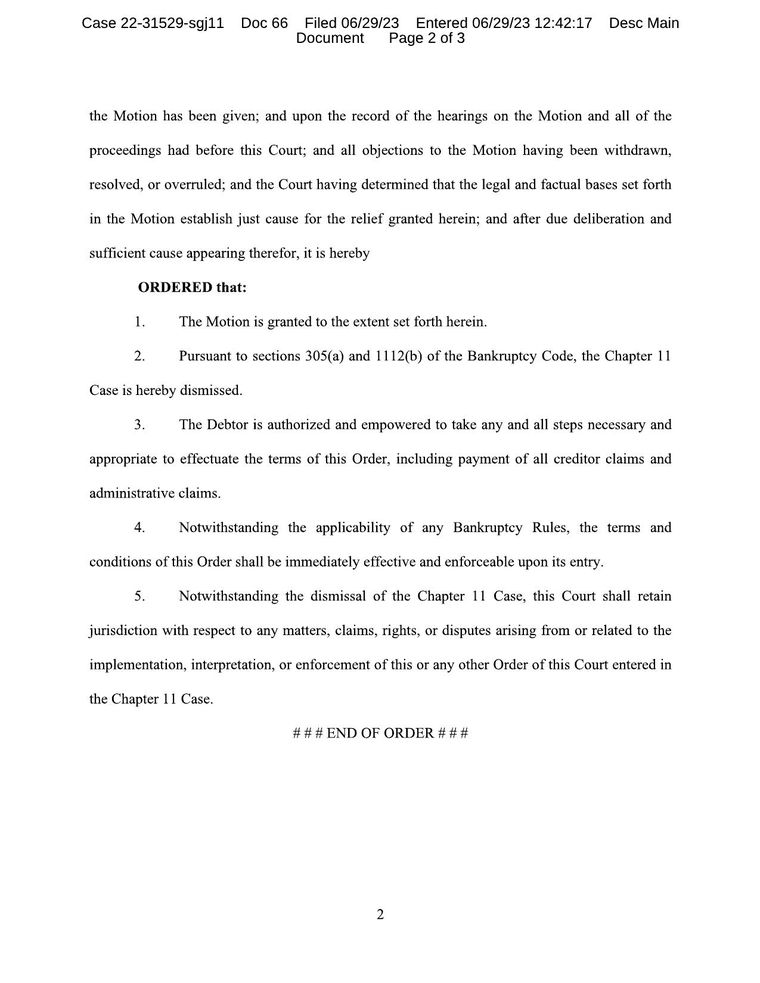
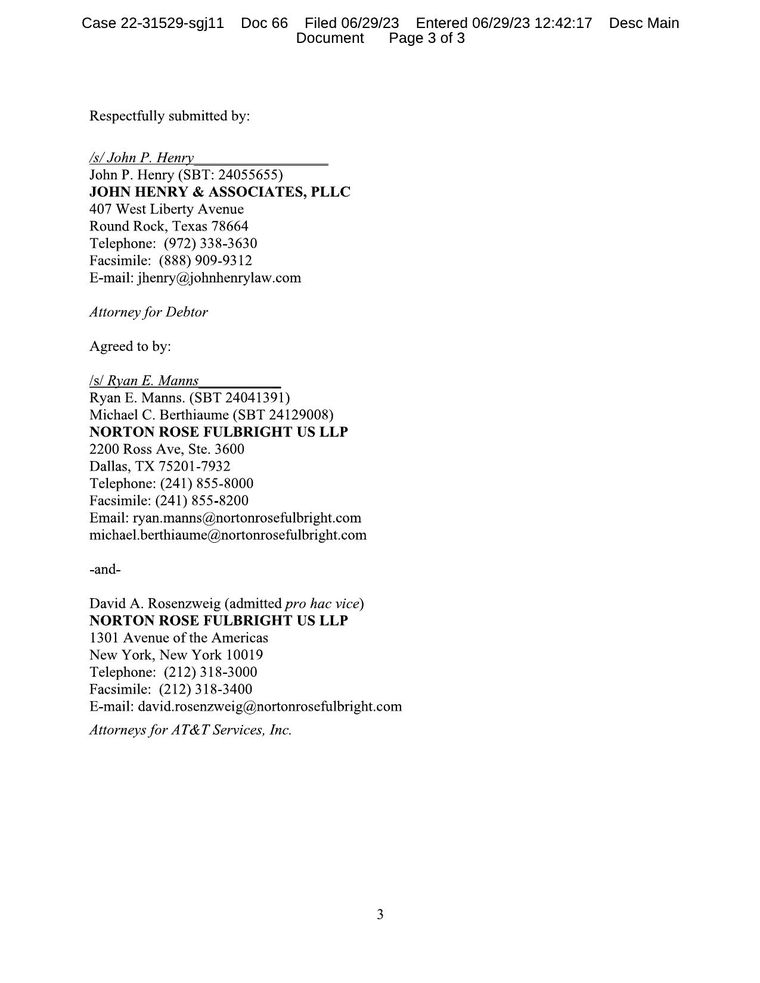
Agreed Order of Dismissal · Bankr. N.D. Tex. · Case No. 22-31529-SGJ · entered June 29, 2023
UNITED STATES BANKRUPTCY COURT FOR THE NORTHERN DISTRICT OF TEXAS DALLAS DIVISION In re: ARGDOWNTOWN, LLC, Debtor Chapter 11 Case No. 22-31529-SGJ AGREED ORDER DISMISSING THE DEBTOR'S CHAPTER 11 CASE Signed June 29, 2023. The following constitutes the ruling of the court and has the force and effect therein described. Upon consideration of the Agreed Motion for Entry of an Order Pursuant to Sections 105(a), 305(a), and 1112(b) Authorizing Dismissal of the Debtor's Chapter 11 Case ("Motion") of ARGDOWNTOWN, LLC, the debtor and debtor-in-possession ("Debtor") of the above-captioned Chapter 11 Case and the Declaration of Richard Ellman in Support of the Motion; and the Court having subject matter jurisdiction to consider and determine the Motion, and grant the requested relief in accordance with 28 U.S.C. §§ 157 and 1334; and consideration of the Motion being a core proceeding pursuant to 28 U.S.C. § 157(b); and venue being proper before this Court pursuant to 28 U.S.C. §§ 1408 and 1409; and it appearing that due and sufficient notice of the Motion has been given; and upon the record of the hearings on the Motion and all of the proceedings had before this Court; and all objections to the Motion having been withdrawn, resolved, or overruled; and the Court having determined that the legal and factual bases set forth in the Motion establish just cause for the relief granted herein; and after due deliberation and sufficient cause appearing therefor, it is hereby ORDERED that: 1. The Motion is granted to the extent set forth herein. 2. Pursuant to sections 305(a) and 1112(b) of the Bankruptcy Code, the Chapter 11 Case is hereby dismissed. 3. The Debtor is authorized and empowered to take any and all steps necessary and appropriate to effectuate the terms of this Order, including payment of all creditor claims and administrative claims. 4. Notwithstanding the applicability of any Bankruptcy Rules, the terms and conditions of this Order shall be immediately effective and enforceable upon its entry. 5. Notwithstanding the dismissal of the Chapter 11 Case, this Court shall retain jurisdiction with respect to any matters, claims, rights, or disputes arising from or related to the implementation, interpretation, or enforcement of this or any other Order of this Court entered in the Chapter 11 Case. ### END OF ORDER ### [Page 3] Respectfully submitted by: /s/ John P. Henry John P. Henry (SBT: 24055655) JOHN HENRY & ASSOCIATES, PLLC Attorney for Debtor Agreed to by: /s/ Ryan E. Manns Ryan E. Manns, Michael C. Berthiaume NORTON ROSE FULBRIGHT US LLP — and — David A. Rosenzweig (admitted pro hac vice) NORTON ROSE FULBRIGHT US LLP Attorneys for AT&T Services, Inc.
Transcribed verbatim from the file-stamped copy. Public record. Reproduced because a result a reader can verify is worth more than a result described.
Questions
Can a Chapter 11 case be dismissed instead of confirmed?
Yes. Section 1112(b) permits dismissal or conversion for cause, and where the parties have resolved matters consensually a dismissal is frequently the outcome that best serves creditors and the estate.
What is the difference between dismissal and conversion?
Dismissal ends the bankruptcy case and returns the parties to their non-bankruptcy positions. Conversion moves the case to Chapter 7, where a trustee liquidates the estate and may pursue avoidance actions. The court chooses between them on the best interests of creditors and the estate.
Does dismissing a Chapter 11 undo the automatic stay?
Yes. The stay terminates when the case is dismissed, under 11 U.S.C. § 362(c)(2)(B), so any creditor remedy that was halted may resume unless the settlement provides otherwise.